Types of Rain Gutters for Gauteng homes (Residential and Industrial)
Rain Gutter Types for Gauteng Homes (A Practical Homeowner’s Guide)
TL;DR: The truth is, several gutter systems can work well.
But based on experience installing gutters across Gauteng, seamless steel gutters usually perform the best for residential homes.
If you’re in the East Rand (Boksburg, Benoni, Lakefield or any area) and wondering who installs seamless gutters near you, Gutters-X-Stream is the name to call. We come to you, roll gutters on-site, and offer free quotes with no hidden costs.
Author: Sean Mays | Date published: 13 March 2026
Rain Gutter Types for Gauteng Homes – Which one should you go for and why?
If you live in Gauteng, you already know how unpredictable the rain can be.
Weeks of dry weather. Then suddenly a heavy Highveld storm rolls in and dumps water across your roof in minutes. When that happens, your rain gutters either handle the load… or they can also fail.
And when they fail, you start seeing the problems quickly.
Water pouring over the sides. Damp walls.
Soil washing away around the foundation. Even roof damage.
That’s why choosing the right rain gutter type for your Gauteng home matters more than most homeowners realize.
Not all gutters perform the same. Some require constant maintenance.
Some rust and are outdated like copper gutters we used to install back in the 90s and 2000s.
Others leak at the joints. And a few options are built specifically to handle the kind of rainfall we see across Johannesburg, Pretoria, and the East Rand.
So which gutters actually make sense for your home?
Let’s break down the most common rain gutter types used in Gauteng, along with their sizes, pros, and a few drawbacks you should know about before installing anything.
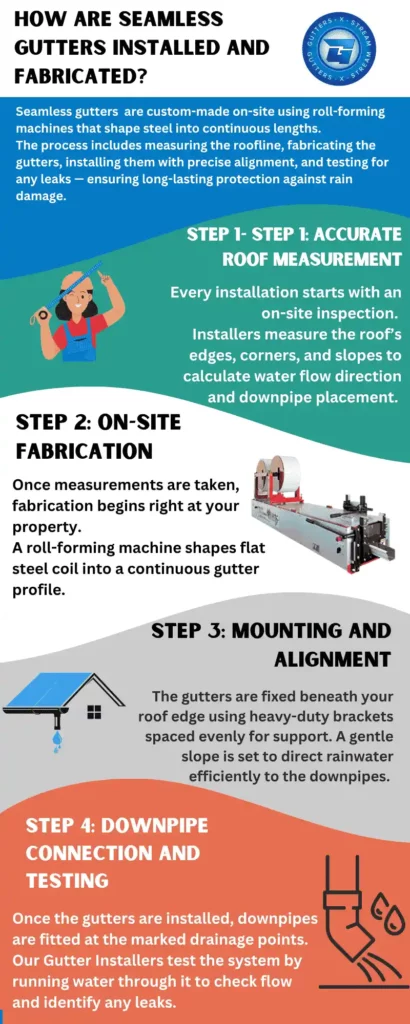
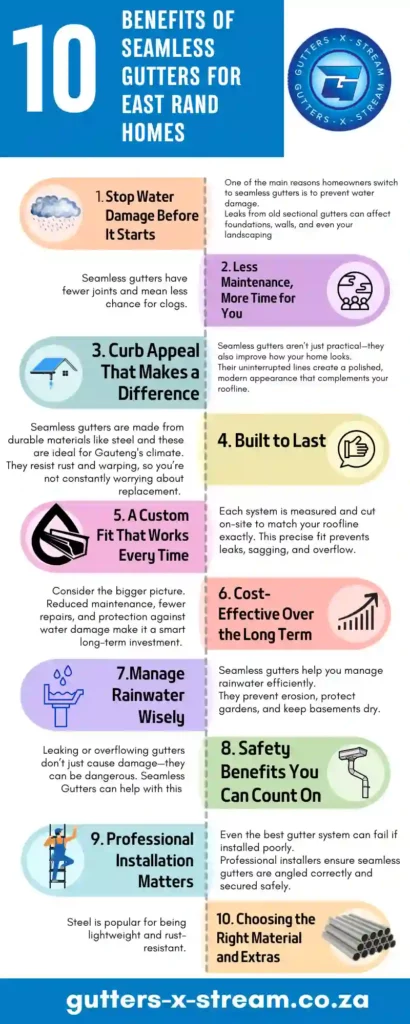
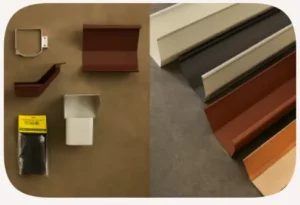
1. Seamless Gutters (The Most Popular Modern Option)
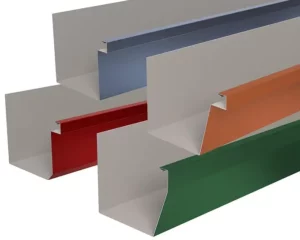
Seamless gutters have become the preferred choice for many homeowners in and around the Gauteng region — and for good reason.
Unlike traditional gutters that are joined together in sections, seamless gutters are formed from one continuous piece of material.
That means far fewer joints where leaks usually start.
If you want a gutter system that works quietly in the background without constant repairs, this is often the best route.
Typical Sizes
- 125mm (5inch) (most common residential size)
- 150mm (used for larger roof areas or industrial factories)
Pros
- No joints = fewer leaks
Traditional gutters leak where sections connect. Seamless gutters remove most of those weak points. - Low maintenance
With fewer seams, there’s less debris buildup and fewer areas where water can escape.
Cons
- Professional installation required
These gutters are usually manufactured on-site with specialized equipment. - Higher upfront cost
They cost more initially, though many homeowners recover that cost through fewer repairs.
For most homes across Gauteng suburbs like Boksburg, Kempton Park, Benoni, and Bedfordview, seamless steel gutters are widely considered the best long-term option its what we have been supplying and installing for the last 20 years.
2. K-Style Gutters (The Common Residential Shape)
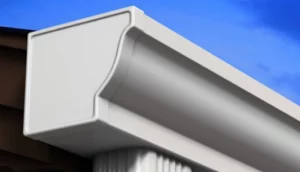
K-style gutters are one of the most widely installed gutter profiles in overseas countries and used to be the standard back in the day.
If you look at the front edge of the gutter, it has a decorative shape that resembles crown molding.
That’s why many modern homes use them — they blend nicely with rooflines.
They also hold a good amount of water, which helps during strong summer storms.
Typical Sizes
- 125mm (5 inch equivalent)
- 150mm (6 inch equivalent)
Pros
- High water capacity
Their shape allows them to carry more water than half-round gutters of the same width. - Good structural strength
The flat back section attaches firmly to fascia boards.
Cons
- Dirt collects in corners
Leaves and debris can gather inside the angled edges. - Cleaning takes a little more effort
Many homes built in Gauteng over the last 20–30 years already have K-style gutters installed that dates back from years ago and are due an upgrade when these start to damage.
3. Half-Round Gutters (Traditional and Decorative)
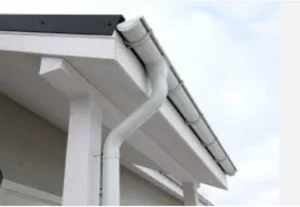
Half-round gutters are exactly what they sound like — a smooth half-circle shape.
You’ll often see them on older homes, heritage properties, or houses with a more classic architectural style.
Because the inside surface is curved, water flows through them smoothly. Debris is less likely to get stuck.
Typical Sizes
- 100mm
- 125mm
- 150mm
Pros
- Water flows smoothly
The curved design allows rainwater to move quickly through the system. - Less debris buildup
Leaves tend to wash through instead of getting trapped in corners.
Cons
- Lower water capacity
They carry slightly less water than K-style gutters. - Installation can cost more
They require special brackets and hangers.
For homeowners restoring older Gauteng houses, half-round gutters can look fantastic while still doing the job.
4. Box Gutters (Used on Larger Roofs)
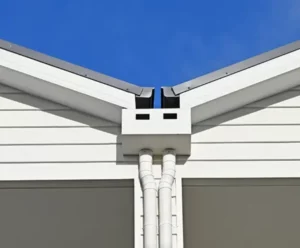
Box gutters are typically used on commercial buildings, large modern homes, and properties with flat or low-slope roofs.
Instead of hanging off the edge of the roof, they are built into the roof structure itself. Because of their depth and width, they can handle large volumes of water.
Typical Sizes
- 150mm
- 200mm
- 300mm (commercial use)
Pros
- Handles heavy rainfall well
Their size makes them suitable for large roof areas. - Clean architectural look
They sit flush with the roof structure.
Cons
- More complex installation
- Blockages can cause overflow inside the roof area
Because of this, box gutters must be installed carefully and kept clear of debris.
5. PVC Gutters / Plastic (Budget-Friendly Option)
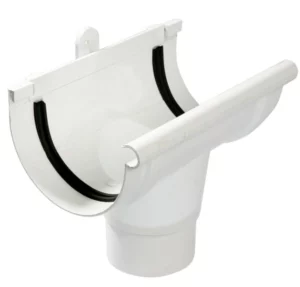
PVC gutters are popular for homeowners who want a low-cost solution.
They are made from plastic rather than steel and are usually sold in sections that clip together.
You’ll often find them in DIY installations or smaller residential projects.
Typical Sizes
- 110mm
- 125mm
Pros
- Affordable
One of the cheapest gutter systems available. - Lightweight
Easy to install without specialized tools.
Cons
- Can become brittle over time
The harsh Highveld sun can cause cracking. - Joints can leak
Since they come in sections, connections are potential leak points.
PVC gutters can work fine in some situations, but many homeowners replace them later with steel or aluminum seamless systems.
6. Aluminium Gutters (Widely Used in Gauteng)
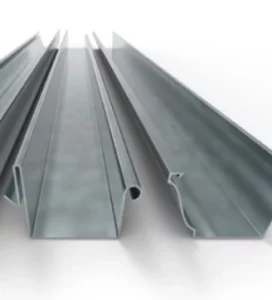
Aluminium gutters are extremely common across Gauteng — particularly in seamless gutter systems.
They strike a good balance between durability, cost, and long-term performance.
Another benefit is that aluminium doesn’t rust, which helps in areas where gutters stay wet during the rainy season.
Typical Sizes
- 125mm
- 150mm
Pros
- Rust resistant
Great for long-term outdoor exposure. - Lightweight but strong
Cons
- Can dent from heavy impact
Ladders or falling branches can cause damage. - Quality depends on thickness
For most residential installations, aluminium remains one of the safest choices.
7. Galvanised Steel Gutters (Strong but Higher Maintenance)
Before zincalume / colourbond gutters became common, galvanized steel gutters were widely used across South Africa.
They are extremely strong and can handle heavy loads, but they do require more maintenance.
Over time, the protective coating can wear down and rust may begin to form.
Typical Sizes
- 125mm
- 150mm
Pros
- Very strong material
- Handles large volumes of water
Cons
- Rust can develop over time
- Heavier and harder to install
Today, many homeowners choose colourlume gutters instead because it requires less upkeep.
Which Rain Gutter Type Is Best for Gauteng Homes?
The truth is, several gutter systems can work well.
But based on experience installing gutters across Gauteng, seamless colourbond (Zincalume) gutters usually perform the best for residential homes.
Here’s why many homeowners in Gauteng prefer them:
- Fewer joints mean fewer leaks
• Minimal maintenance
• Strong water flow during Highveld storms
• Long lifespan
Gauteng storms can dump a lot of water in a short time. A gutter system with good capacity and minimal weak points will handle that much better than sectional plastic systems.
A Quick Tip Most Homeowners forget:
Many people focus on gutter style but forget about gutter size.
If your roof area is large, small gutters will overflow during heavy rain — even if they’re installed perfectly.
That’s why professional installers often recommend 125mm or 150mm gutters for most Gauteng homes.
The extra capacity helps prevent overflow during intense storms.
So which rain gutter is best for Gauteng homes?
Rain gutters may not be the most exciting part of a house.
But they quietly protect some of the most important parts of your property.
A good gutter system helps prevent:
- foundation damage
- soil erosion
- damp walls
- roof edge deterioration
And in a place like Gauteng, where storms can arrive quickly and dump serious rainfall, having the right system makes a big difference.
If you’re planning new gutters or replacing an old system, it’s worth taking a moment to think about which rain gutter type actually suits your home best.
Because once the next Highveld storm hits, you’ll be glad your gutters were ready for it.
About the Author
Sean Mays is the owner of Gutters-X-Stream in Boksburg. He has over 20 years experience in supplying and installing of seamless gutters in the East Rand. His areas of expertise include fabrication of seamless gutters, domestic and industrial gutters, as well as gutter maintenance.
Areas Served:
- Boksburg
- Benoni
- Springs
- Edenvale
- Bedfordview
- Kempton Park
- Heidelberg
- Alberton
- Khayalami AH
- Linksfield
- Apex (Industrial Gutters)
- Alberton
- Seamless Gutters in Heidelberg